
on
The American conversation about housing is often framed around affordability. We debate interest rates, rising home prices, inventory shortages, and mortgage qualification standards. These issues deserve attention, but they frequently obscure a more consequential question, one that reaches beyond economics and into the realm of culture, identity, and generational progress. What happens to a family when no one owns anything?
What happens when grandparents spend their entire lives renting, parents spend their entire lives renting, and children are raised without ever witnessing the responsibilities, rewards, and possibilities that come with ownership? What happens when ownership disappears not only from a family’s balance sheet but from its imagination? The answer reveals itself in ways that extend far beyond housing. It influences how families think about the future, how communities define themselves, and how wealth is either built or perpetually deferred.
For much of American history, Black Americans understood the significance of ownership in a way that often gets lost in contemporary discussions about housing policy. Following emancipation, land ownership represented far more than economic advancement. It represented autonomy it represented protection against uncertainty it represented the possibility of creating something durable enough to survive the lifespan of a single individual. This understanding explains why newly freed Black Americans pursued property ownership with such determination despite overwhelming legal, social, and economic barriers. They understood that ownership was not merely about possessing an asset; it was about possessing agency.
That historical reality forces us to confront an uncomfortable truth. While the Black community continues to discuss income inequality, educational attainment, and employment opportunities, we often spend insufficient time examining the cultural consequences of living without assets. Income matters education matters employment matters. But ownership occupies a unique place in the architecture of wealth because ownership fundamentally changes how people relate to the future.
A person who owns property learns to think differently ownership requires planning it requires maintenance it requires delayed gratification. It requires making decisions whose benefits may not become visible for years or even decades. A homeowner repairing a roof is not simply fixing a structure they are protecting future value. A homeowner planting a tree may never personally enjoy its full shade, yet the act itself reflects a belief in continuity ownership that teaches people to think beyond immediate consumption and toward long-term stewardship. These lessons are not confined to the homeowner alone. Children absorb them as well.
Many of us can remember being told to cut the grass, paint a fence, clean the gutters, or help with household repairs. At the time, those tasks felt like chores. Looking back, they were lessons. They taught responsibility, accountability, and pride in ownership. They demonstrated that maintaining value requires effort. They revealed that a home is not simply a place to live but an asset to protect and improve. Whether parents explicitly intended it or not, they were teaching their children how ownership works.
When ownership is absent, however, those lessons often disappear with it.
Children raised in households without assets may never see discussions about equity, appreciation, property taxes, maintenance reserves, or long-term financial planning. Housing becomes something consumed rather than something cultivated. The conversation centers on monthly expenses rather than accumulated value. Shelter becomes disconnected from wealth creation. Over time, the absence of ownership can subtly reshape expectations. Children begin to view renting as normal, ownership, as exceptional, and wealth accumulation through assets as something reserved for other people. This shift has consequences that compound across generations.
The most profound effect of ownership is not the property itself. It is the mindset that ownership produces families that own property often pass down more than houses they pass down habits they pass down expectations. They pass down a belief that investments are worth making because the future is worth planning for. Ownership creates a culture in which people learn to think about what they will leave behind rather than merely what they will consume today.
The opposite is also true when ownership is absent for multiple generations, the absence itself can become cultural. Families may unintentionally pass down short-term thinking because long-term asset building was never modeled. The issue is not a lack of intelligence or ambition. It is a lack of exposure. People aspire to what they can see if ownership is never visible, it becomes increasingly difficult to imagine.
This reality has implications that extend beyond individual households and into entire communities. Neighborhoods are ecosystems and the condition of one property affects the value of another. A maintained home contributes to community stability neglected property often undermines it. Homeownership encourages investment not only in a structure but in the broader environment surrounding it. Residents who own property are more likely to see themselves as stakeholders in the future of a neighborhood because they literally possess a stake in its success.
The erosion of ownership therefore affects statistics more than wealth it affects civic engagement, neighborhood cohesion, and collective pride. Communities with strong ownership cultures tend to produce stronger institutions because residents have a long-term interest in preserving and improving the places they call home.
This is why the conversation about Black homeownership cannot be reduced to mortgage rates or down-payment assistance, important as those issues may be. The deeper challenge is culturally; we must restore an understanding of ownership as a foundational pillar of family and community life. We must teach our children not only how to earn money but how to acquire assets we must explain why maintaining property matters, why appreciation matters, why equity matters, and why every generation should strive to leave the next generation further ahead than where it began.
Too often, we speak about homeownership as a personal achievement in reality, homeownership is a communal act. It strengthens families, stabilizes neighborhoods, and creates opportunities that extend beyond a single lifetime. Every home purchased, maintained, and ultimately transferred becomes part of a larger story about progress.
The question, then, is not simply whether more Black families should become homeowners. The more urgent question is what happens if we do not. What happens if another generation grows up without experiencing ownership? What happens if another generation never learns the lessons ownership teaches? What happens if another generation reaches adulthood without believing property ownership is an attainable goal?
The answers should concern all of us because before families lose wealth, they often lose the culture that creates wealth. Before communities lose assets, they often lose the belief that assets matter, ownership disappears from a balance sheet, it usually disappears from the imagination.
The future of Black wealth will not be determined solely by what we earn. It will be determined by what we own, what we preserve, and what we pass forward. Ownership remains one of the most powerful mechanisms through which families transform effort into opportunity and opportunity into legacy. That truth was understood by those who came before us. It is a truth we must reclaim for those who come after us.
Because property is Property is Power!
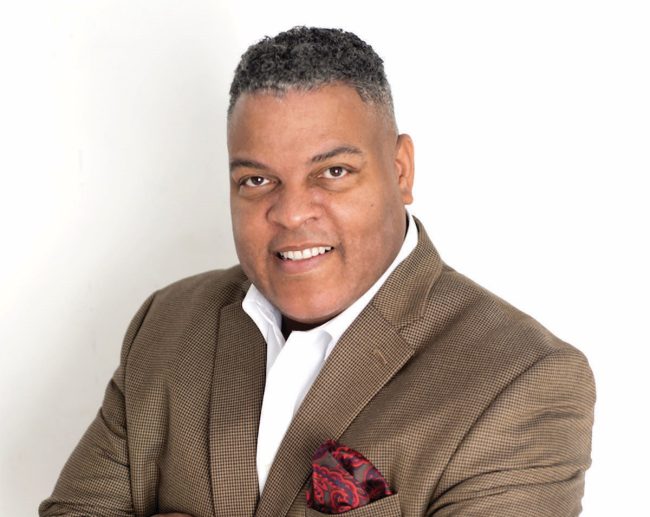
Dr. Anthony O. Kellum – CEO of Kellum Mortgage, LLC Homeownership Advocate, Speaker, Author NMLS # 1267030 NMLS #1567030 O: 313-263-6388 W: www.KelluMortgage.com.
Property is Power! is a movement to promote home and community ownership. Studies indicate homeownership leads to higher graduation rates, family wealth, and community involvement
Join our email list to stay connected.